
Summary
The United States is facing a chronic health crisis driven largely by diet and lifestyle. Rising rates of obesity, diabetes, and metabolic disease are forcing a national reckoning that extends beyond healthcare into food systems and business practices. As public awareness grows, food companies will eventually be pressured to reformulate products, shift toward better nutrition, or risk losing relevance. This article explains what is changing, why it matters today, and how these developments could reshape consumer behavior and corporate strategy in the years ahead.
Economic Data
- 📈 Non-Farm Employment Change: Jan 9, 2026
- 📈 Prelim UoM Consumer Sentiment: Jan 9, 2026
📚 Deep Dive 📚
America Is Sick — And the Data Is Forcing a Reckoning
For decades, the United States followed a food system built on convenience, cheap calories, and heavy processing. The results are now impossible to ignore.
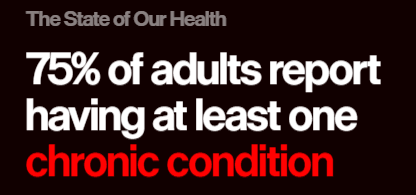
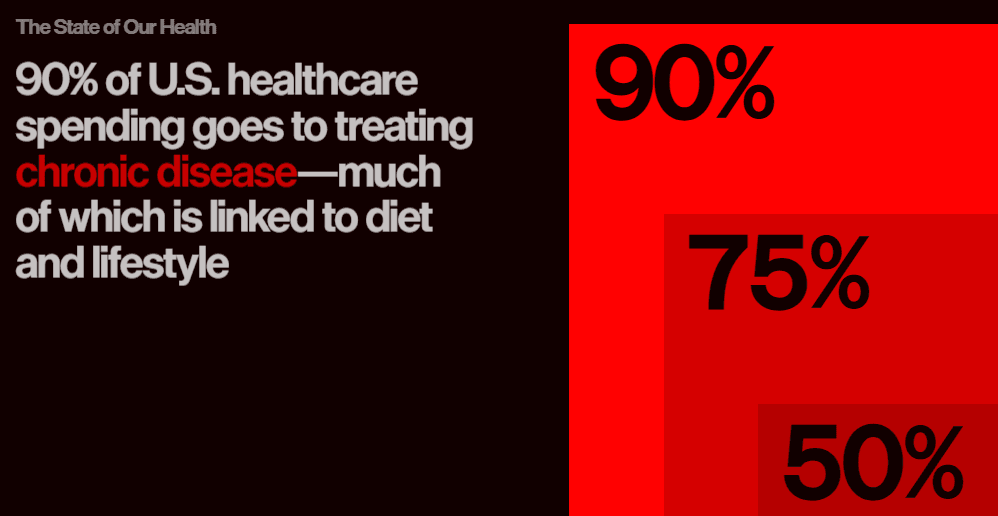
- 75% of adults report at least one chronic condition
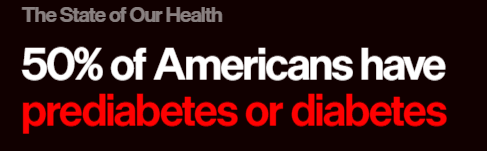
- 50% of Americans have prediabetes or diabetes
- 90% of U.S. healthcare spending goes toward chronic disease
Much of this is closely linked to diet and lifestyle.
This is not just a health issue anymore. It is becoming a structural reality that will eventually force change across healthcare, policy, and food systems.
The Shift: From “Eat More” to “Eat Better”
The old food pyramid encouraged:
- Heavy grain consumption
- Low fat intake
- Highly processed convenience foods
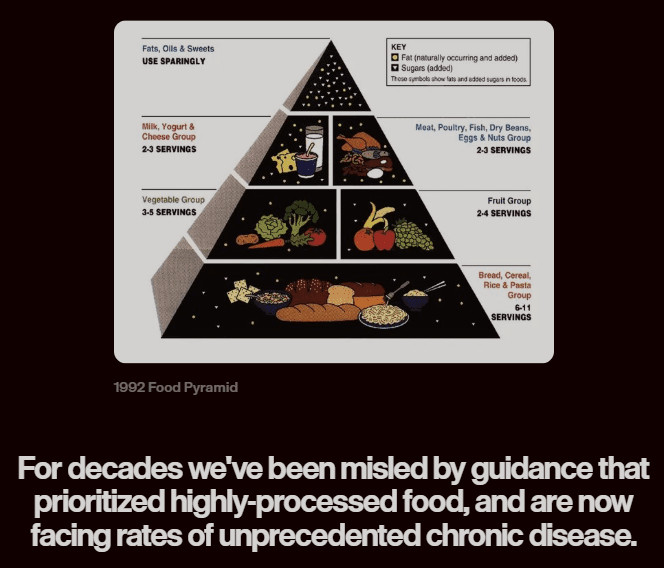
Over time, this helped contribute to:
- Obesity
- Insulin resistance
- Chronic inflammation
- Rising healthcare costs
Today, the conversation is beginning to change.
People are paying closer attention to:
- Protein and satiety
- Lower sugar intake
- Whole, minimally processed foods
- Blood sugar stability
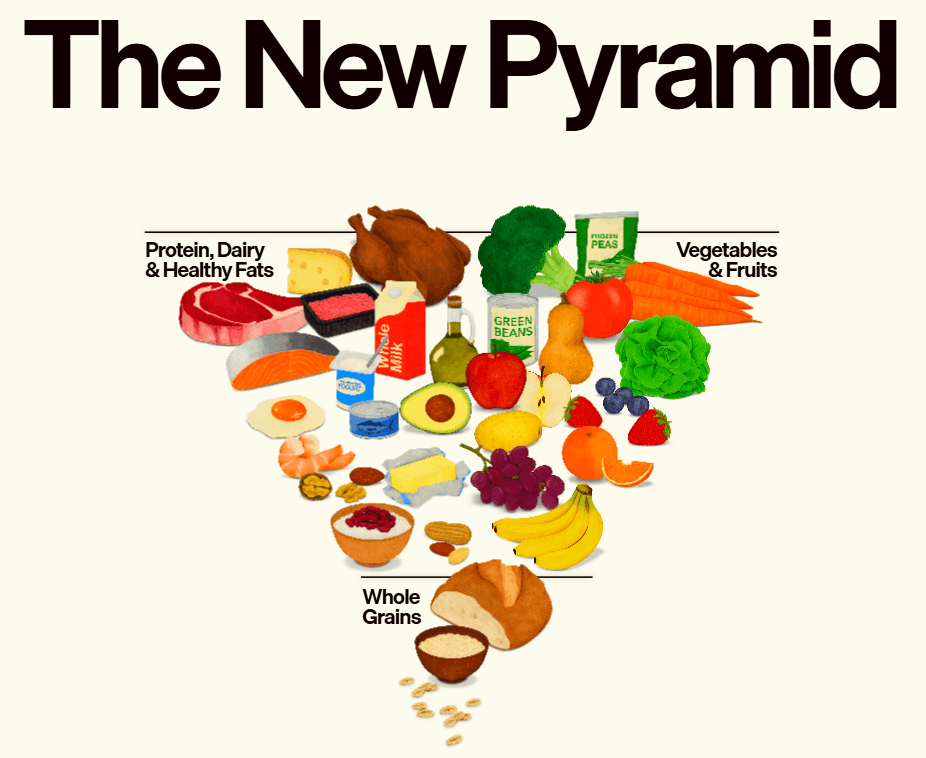
This shift is driven by necessity, not trends.
Why This Matters for Everyday People
Greater food awareness can help people today in very real ways:
- Higher-protein meals help control hunger
- Reducing sugar supports energy and focus
- Whole foods promote long-term metabolic health
- Small improvements compound over time
This isn’t about being perfect. It’s about moving in the right direction.
The Business and Market Implications
As awareness grows, food companies will eventually be forced to respond — through reformulation, repositioning, or loss of relevance.
This response has not fully happened yet, but the pressure is building.
Likely Beneficiaries (If the Shift Accelerates)
These companies are better positioned if consumer behavior continues moving toward nutrition and real food.
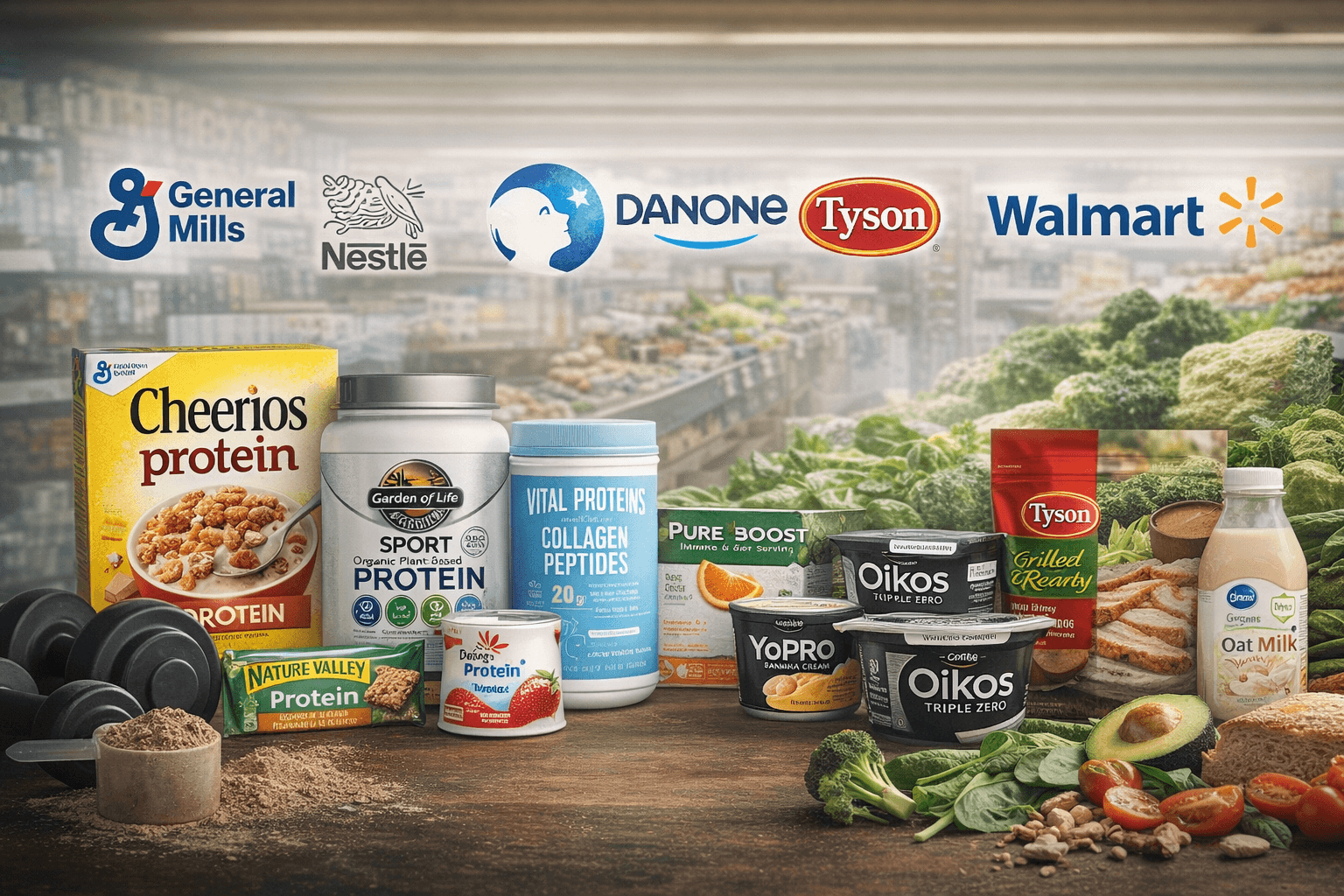
- General Mills – shifting toward higher-protein and lower-sugar products
- Nestlé – expanding nutrition, supplements, and health-focused brands
- Danone – strong exposure to yogurt, probiotics, and gut health
- Tyson Foods – benefits from sustained protein demand
- Walmart – controls shelf space and private-label reformulation
At Risk (If Current Habits Break)
These companies rely heavily on sugar, refined carbohydrates, and ultra-processed foods.
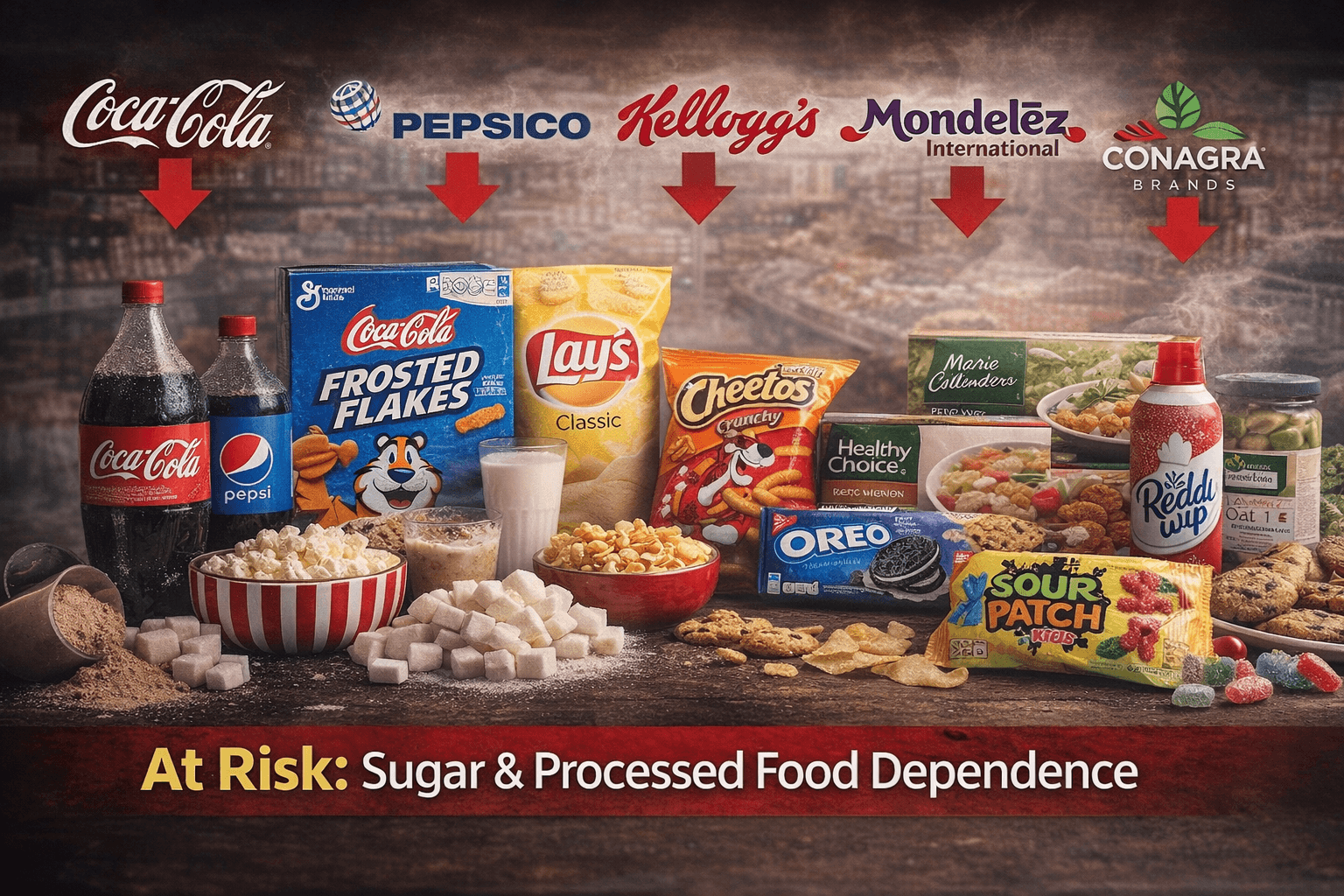
- Coca-Cola – heavy sugar exposure faces rising scrutiny
- PepsiCo – significant reliance on processed snacks and beverages
- Kellogg’s – weakening demand for grain-heavy cereals
- Mondelez – high exposure to sweets and ultra-processed snacks
- Conagra Brands – vulnerable without meaningful reformulation
Adaptation Required
Some companies are in the middle. They can survive — but only if they change.
- Unilever
- Campbell Soup
- Hormel
Their future depends on:
- Reducing added sugars
- Improving ingredient quality
- Honest labeling
- Providing real nutritional value
The Bigger Picture
Food is becoming inseparable from health.
- Insurers want prevention
- Employers want lower healthcare costs
- Governments want sustainable systems
- Individuals want to feel better
The system cannot continue as it has.
What Comes Next
This is not about one diet or one product.
It is about:
- Satiety over empty calories
- Stability over sugar spikes
- Quality over quantity
The public conversation is changing first.
Policy, business, and markets tend to follow later.
Final Thought
America did not become unhealthy overnight — and recovery will not happen overnight either.
But awareness is the first step.
Understanding food, health, and incentives today helps people:
- Make better personal choices
- See where long-term pressure is building
- Recognize opportunities before they become obvious
The data is clear. The conversation is shifting.
What happens next will matter — for health, business, and society. Read the official government release here!
Join Our Free Trading Community
Inside our FREE GAR Capital Discord, we cover macro trends, market-moving narratives, stock watchlists, and real-time insights you won’t see on social media.
You’ll get:
- Daily market commentary
- Stock ideas tied to real-world trends
- Educational breakdowns for beginners and advanced traders
- A community focused on learning, not hype
👉 Join free here: https://www.gar.capital/free-signup/
No cost. No spam. Just real conversations around markets, money, and what’s coming next.