
Summary
Markets are questioning whether Iran escalation could trigger a repeat of the 2022 bear market. While energy and volatility would likely spike, today’s macro backdrop is different — especially regarding Fed policy and liquidity. In 2022, inflation surged and rate hikes drained liquidity, crushing equities. This time, the key variable is bond yields. If bonds rally and liquidity holds, any drawdown may be sharp but temporary.
Market Watch
Economic Data

📚 Deep Dive 📚
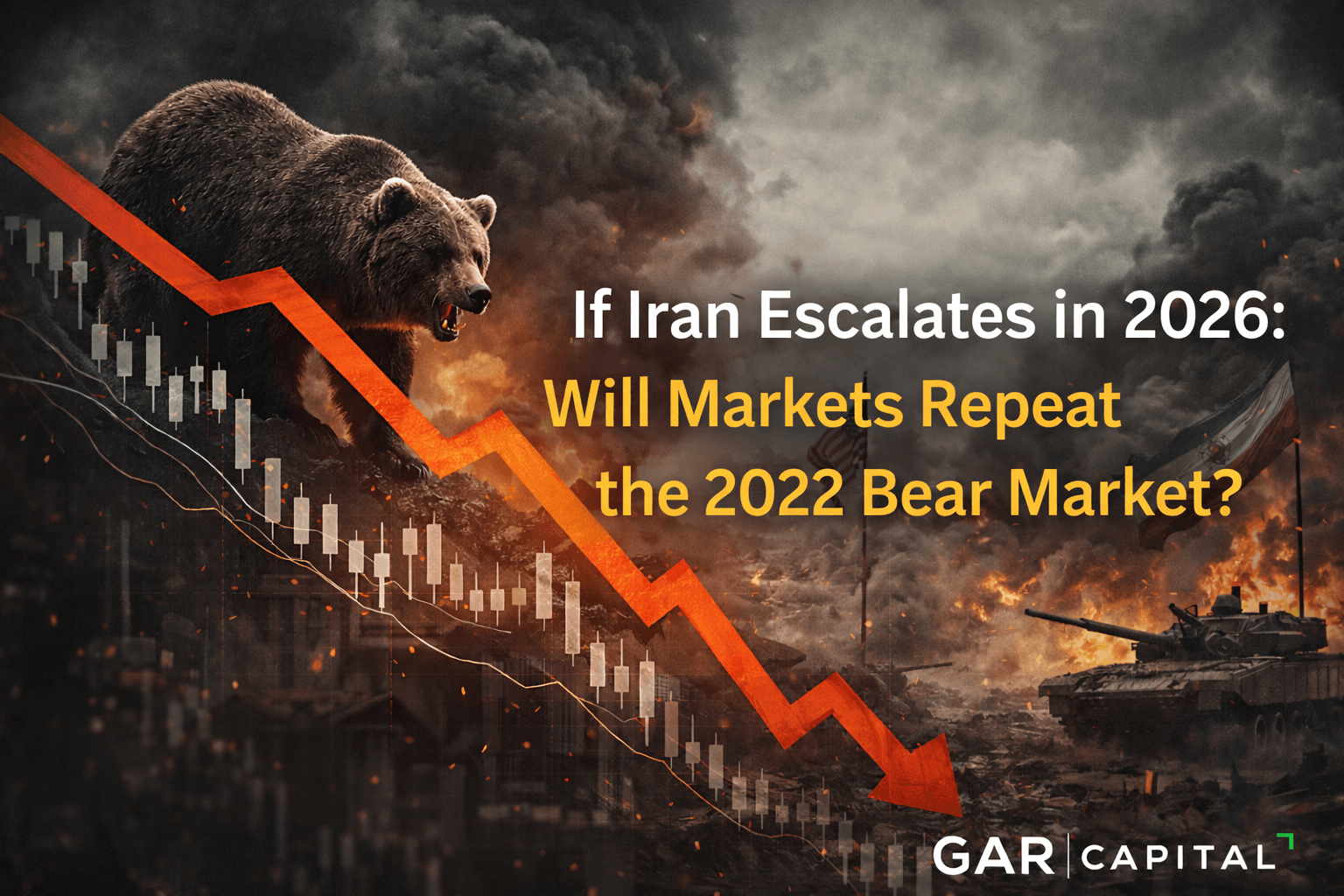
If Iran Escalates: Is This Another 2022 Moment?
Four years ago, Russia invaded Ukraine.
Markets were caught off guard. Energy exploded higher. Inflation surged. The Fed was forced into aggressive rate hikes. Stocks entered a structural bear phase.
Now tensions are rising again in the Middle East.
The question investors are asking:
Is this 2022 all over again?
Let’s break it down clearly.
2022 Playbook: What Actually Happened
When Russia invaded Ukraine in February 2022:
- Oil surged from roughly $90 to over $120
- Natural gas spiked dramatically
- Wheat and industrial metals ripped higher
- VIX surged above 35
- The S&P 500 rolled into a sustained drawdown
- Inflation accelerated further
- The Federal Reserve began its most aggressive rate-hike cycle in decades
The key transmission mechanism was:
Energy shock → Inflation spike → Rate hikes → Liquidity drain
It wasn’t just war headlines.
It was the tightening of financial conditions that crushed equity multiples.
Liquidity left the system.
Iran 2026: What Is Different
If the U.S. were to conduct a limited strike on Iran, the initial market reaction could resemble 2022 in tone — but the macro backdrop today is materially different.
Important differences:
- Iran is already heavily sanctioned
- Global supply chains are more normalized
- The Fed is not in an aggressive tightening cycle
- Inflation is elevated but not accelerating at 2022 velocity
- Corporate balance sheets are generally stronger than they were entering 2022
Most reporting suggests a limited strike scenario is more plausible than a ground invasion.
That distinction matters.
Contained events behave differently than structural wars.
What Would Likely Move First
If escalation occurs, expect immediate movement in:
Energy
Oil and refined products would spike on fear premium, especially if Strait of Hormuz disruption becomes credible.
Defense
Aerospace and defense names would likely catch a bid.
Gold
Classic safe-haven response.
Volatility
VIX expansion and short-term de-risking.
U.S. Dollar
Typically strengthens in risk-off environments.
How Bad Could Equities Get Hit?
In 2022, the S&P 500 ultimately fell roughly 25% peak to trough.
But that decline was not caused by geopolitics alone. It was driven by:
- Energy shock
- Inflation surge
- Aggressive Fed tightening
- Liquidity drain
Today, the most important variable is liquidity.
If bonds are bid higher during a risk-off episode:
- Treasury yields fall
- Financial conditions ease
- Discount rates decline
- Equity valuation pressure softens
That is a major difference from 2022.
In 2022, bonds sold off as inflation surged. That compounded equity weakness.
If bonds rally this time, falling yields could cushion equities.
Liquidity is the oxygen of bull markets.
As long as liquidity is not being aggressively removed, geopolitical drawdowns tend to be sharp — but recoverable.
Possible Drawdown Framework
Limited Strike Scenario
- 5% to 10% equity pullback
- Energy spikes
- Bonds rally
- Recovery within weeks to months
Regional Escalation Scenario
- 10% to 15% drawdown
- Oil sustains above key resistance
- Volatility elevated
- Sector rotation into energy, defense, staples
Full Scale War Scenario
- Greater than 20% drawdown
- Structural repricing of risk assets
- Inflation spike risk returns
- Policy response becomes central
Under current information, the probability of the third scenario remains low.
Sector Rotation Playbook
Potential beneficiaries:
- Energy producers
- Energy infrastructure
- Defense contractors
- Precious metals
- Utilities
- Consumer staples
Potential pressure areas:
- High-multiple growth
- Airlines and transportation
- Consumer discretionary
- Emerging markets exposed to oil shocks
However, if yields fall aggressively, growth stocks could stabilize faster than in 2022 because lower discount rates support longer-duration assets.
The Big Question: Does Liquidity Break?
In 2022, the war accelerated inflation and forced central banks to drain liquidity.
That was the real damage.
If an Iran event does not trigger renewed tightening and instead causes bonds to rally, the shock may prove cyclical rather than structural.
Watch closely:
- Oil sustained above major breakout levels
- 10-Year Treasury yield direction
- Credit spreads
- Dollar strength
- Fed communication
These variables will determine whether this is a temporary volatility event — or the start of a new macro regime.
Bottom Line
Geopolitical shocks create fear.
Fear creates volatility.
But sustained bear markets require tightening liquidity.
If bonds rally and yields fall, the market has a cushion.
If inflation reignites and policy tightens, then we start talking about true 2022 analogs.
Until then:
We prepare.
We position.
We do not panic.
Join GAR Capital Lifetime Legacy Membership
In volatile macro environments, preparation beats prediction. Our Lifetime Legacy Membership gives you full access to all options, futures, and stock trade alerts, live Discord sessions with Carlos, and every on-demand course — including all future courses, grandfathered in for life.
When markets move fast, you need positioning, not panic. Lock in lifetime access while this offer is still available and trade alongside us through whatever comes next.
Payment plans available as low as $160 a month - see options at checkout!