

Summary
McDonald’s USA will invest over $200M in the next seven years to expand regenerative farming with the National Fish & Wildlife Foundation. The program will fund ranchers with grants and support to adopt rotational grazing, restore grasslands, and improve soil and water health on up to 4M acres. Backed by suppliers like Cargill and Golden State Foods, the effort strengthens rural economies, boosts biodiversity, and builds a resilient beef supply chain while advancing McDonald’s sustainability goals.
Economic Data
📚 Deep Dive 📚
McDonald’s Pledges $200M+ to Regenerative Ranching—What It Means for U.S. Beef, Farmers, and the Golden Arches
McDonald’s USA
will invest more than $200 million over seven years to scale regenerative grazing and grassland conservation across U.S. cattle country through a new partnership with the National Fish & Wildlife Foundation (NFWF). The program will fund rancher grants, technical assistance, and measurement to improve soil health, water outcomes, biodiversity, and supply-chain resilience. It’s the company’s largest-ever U.S. investment in regenerative agriculture and includes support from major suppliers (e.g., Cargill, Golden State Foods).
What McDonald’s Just Announced
- Size & timing: Over $200 million invested across seven years, making this McDonald’s USA’s largest U.S. regen-ag commitment to date.
- Vehicle: The Grassland Resilience and Conservation Initiative, administered with NFWF, will award competitive grants to ranchers for regenerative projects—think rotational grazing, water and riparian restoration, wildlife habitat, and reduced reliance on synthetic inputs.
- Scope: Up to ~4 million acres of U.S. rangeland targeted, potentially spanning as many as 38 states.
- Partners: Key U.S. beef suppliers (e.g., Cargill, Golden State Foods) are contributing funding and support; NFWF manages grants and monitoring.
- First grants: Initial recipients are expected to be named in January.
What “Regenerative Grazing” Actually Means
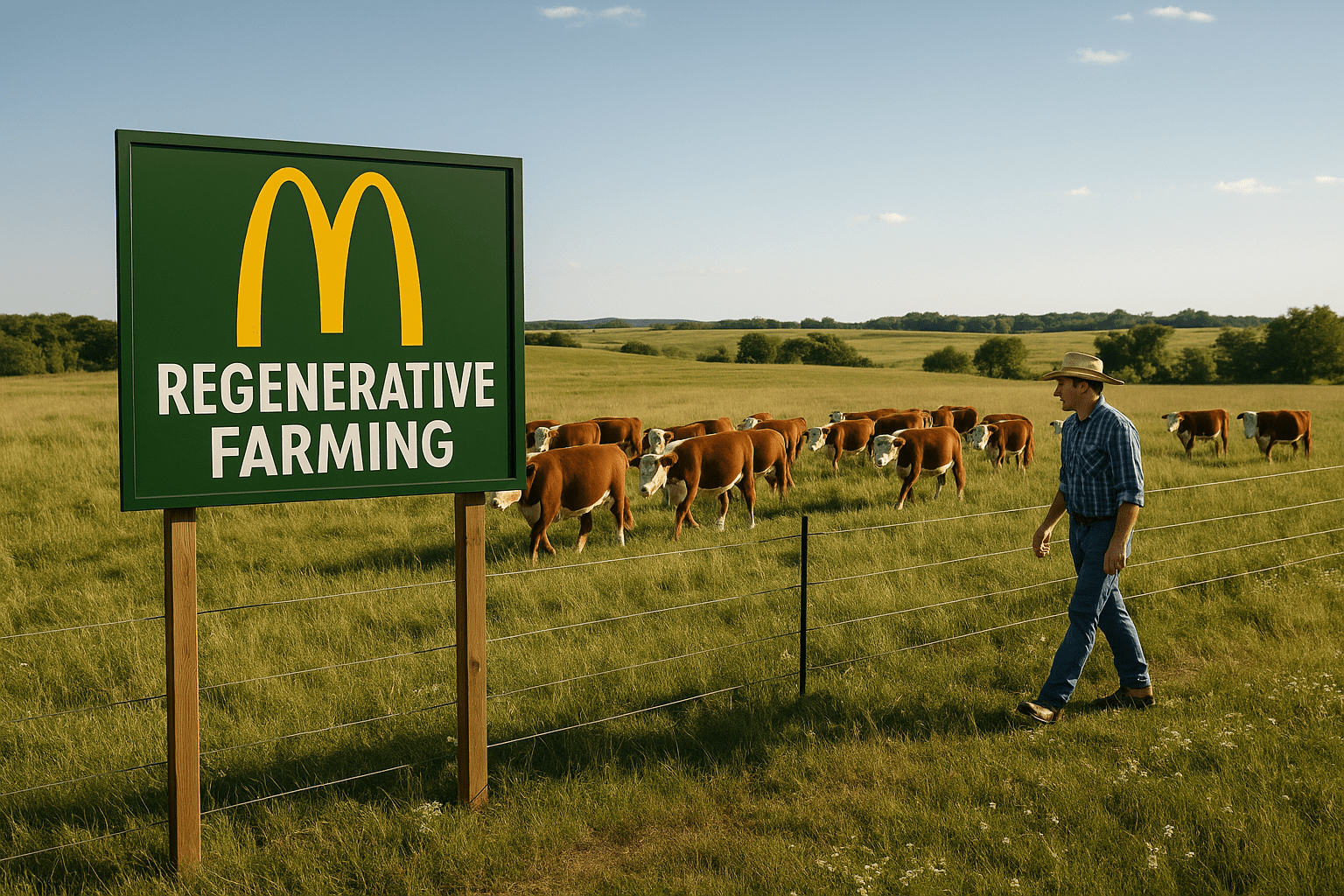
Regenerative grazing centers on rotational herd movement so pasture has time to recover—building soil organic matter, improving water infiltration, boosting forage productivity, and supporting wildlife. Over time, healthier, deeper-rooted grasslands can store more carbon and reduce erosion, while more resilient forage can lower supplemental feed needs and improve ranch economics.
Common practices likely to be funded:
- Adaptive/rotational grazing plans tailored to local ecology
- Water infrastructure (tanks, pipelines) that enable smarter rotations
- Riparian/grassland habitat restoration for birds and pollinators
- Soil-health measurement (baselines and ongoing monitoring)
- Producer networks & technical assistance via NFWF and partners
Why This Is Good for Americans
- Healthier working lands: Restored grasslands mean cleaner water, better drought resilience, and richer biodiversity across flyways and prairie ecosystems that benefit communities far beyond ranch fences.
- Stronger rural economies: Grant dollars and technical support help lower adoption risk for ranchers and can improve profitability through better forage and herd outcomes.
- Food-system resilience: Regenerative practices can stabilize U.S. beef supply amid climate variability and trade/policy swings—this is a long-term investment in supply-chain resilience.
- Climate co-benefits: Healthier soils can store more carbon and reduce runoff—key to meeting ag-sector emissions goals without sacrificing productivity.
Why This Is Good for McDonald’s
- Supply assurance at scale: McDonald’s sells more beef than any other restaurant chain—healthier, more resilient grasslands reduce production volatility and input risk across a vast supplier base.
- Cost & quality over the long run: Better forage systems can lower feed costs and improve weight gains, supporting consistent quality and margins through commodity cycles.
- ESG credibility with measurement: Partnering with NFWF adds third-party rigor (baselines, monitoring, reporting), aligning with McDonald’s broader sustainability and climate commitments.
- Strategic optics in a heated food debate: With growing public scrutiny of oils, additives, and industrial ag—captured in ongoing MAHA (“Make America Healthy Again”) discourse—this move positions McDonald’s as leaning into healthier landscapes even while running a massive beef business.
Note on MAHA: Some advocates claim MAHA’s cultural and policy push is nudging big brands toward healthier supply chains; however, McDonald’s does not attribute this investment to MAHA. The company frames the initiative around regenerative outcomes and supply resilience via the NFWF partnership.
How the Money Flows (and What to Watch)
- Competitive grants: Ranchers and conservation partners apply to NFWF programs; winning projects receive cost-share funding for infrastructure, planning, and monitoring.
- Supplier co-funding: Major beef suppliers co-invest, improving alignment from pasture to patty.
- Measurement & transparency: Expect acres impacted, practices adopted, and habitat outcomes to be tracked and publicly reported through NFWF.
- Milestones: Look for first-round grantees in January and annual updates on acres, water metrics, habitat indicators, and producer economics.
The Bigger Picture: Regeneration Goes Mainstream
This move aligns McDonald’s with a broader corporate trend—General Mills, Nestlé, Walmart, PepsiCo and others have been piloting or funding regenerative transitions across crops and livestock. It’s a sign that regen-ag is shifting from pilots to portfolio strategy for multinationals managing climate and supply risk (MAHA wins).
Bottom Line
McDonald’s $200M+ grasslands initiative is a market-moving bet that healthier soils and habitats make for a stronger beef supply chain—good for ranchers, ecosystems, and long-term product quality. It won’t settle every debate over nutrition or food policy, but it does put real money—and measurement—behind practices that many land stewards have championed for decades. If the NFWF partnership delivers the scale promised, this could become a defining case study in how a fast-food giant helps shift U.S. ranching toward regenerative resilience.
Is MAHA Winning? So far - I think so. Stay bullish out there - Anthony A.