Summary
Not all oil is created equal. Venezuelan crude is heavy, sour, and trades at a discount, requiring specialized refining infrastructure, while U.S. oil is lighter and easier to process. This difference shapes refinery margins, stock performance, and energy market reactions to geopolitical headlines. Integrated oil majors and Gulf Coast refiners are positioned to benefit from access and margins, while any Venezuelan production recovery remains a multi-year process rather than an immediate supply surge.
Economic Data
📚 Deep Dive 📚
Venezuelan Oil vs U.S. Oil: Why This Headline Matters for Energy Markets
With Venezuela back in the geopolitical spotlight, energy markets are once again reminding traders of an important truth:
Not all oil is created equal.
Understanding the difference between Venezuelan oil and U.S. oil explains why crude prices, refinery margins, and energy stocks can react very differently to the same headline.
The Core Difference: Heavy vs Light Crude
Venezuelan Oil
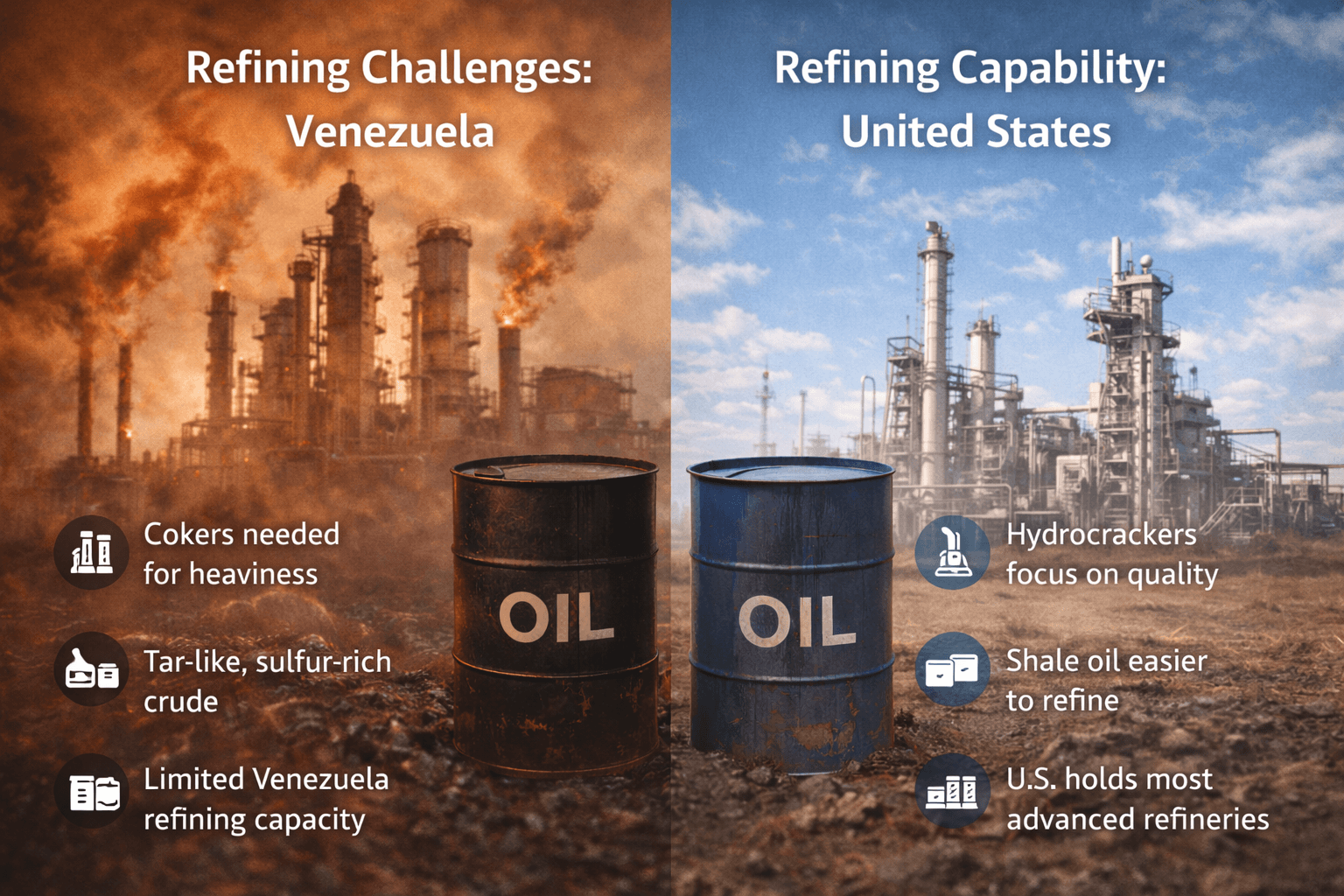
- Predominantly heavy to extra-heavy crude
- High sulfur content (“sour”)
- Thick, tar-like consistency
- Concentrated in the Orinoco Belt
This oil is harder and more expensive to refine, requiring specialized infrastructure.
U.S. Oil
- Mostly light, sweet crude
- Low sulfur
- Easier to transport and refine
- Driven by shale production in the Permian, Eagle Ford, and Bakken
Simple takeaway:
Venezuelan oil is dirtier but cheaper.
U.S. oil is cleaner and more flexible.
Why Heavy Oil Still Matters (and Always Will)
Here’s the nuance markets often miss.
Many U.S. Gulf Coast refineries were intentionally built to process heavy crude, because heavy oil trades at a discount. These refineries invested billions in:
- Cokers
- Hydrocrackers
- Advanced desulfurization units
When these refineries can access discounted heavy crude, margins improve — even if headline oil prices fall.
This is why geopolitical events tied to heavy-oil producers don’t just move crude futures — they move refiners and integrated majors.
Pricing Power: Why Venezuelan Oil Trades at a Discount
Venezuelan crude typically trades below WTI and Brent because it is:
- Heavy
- Sour
- Costly to upgrade
- Infrastructure-dependent
That discount:
- Hurts producers without refining capability
- Benefits refiners that can process it efficiently
This is why energy stocks can rise even when oil prices stay flat or fall.
Infrastructure Reality Check
Even in a best-case political scenario, Venezuela’s oil sector faces:
- Years of underinvestment
- Aging equipment
- Workforce loss
- Export bottlenecks
Production recovery is a multi-year process, not an overnight supply surge. Markets understand this, which is why current headlines are more about risk premium and asset access — not immediate oversupply.
Who Benefits Most from Venezuelan Heavy Crude
🟢 Primary Beneficiaries
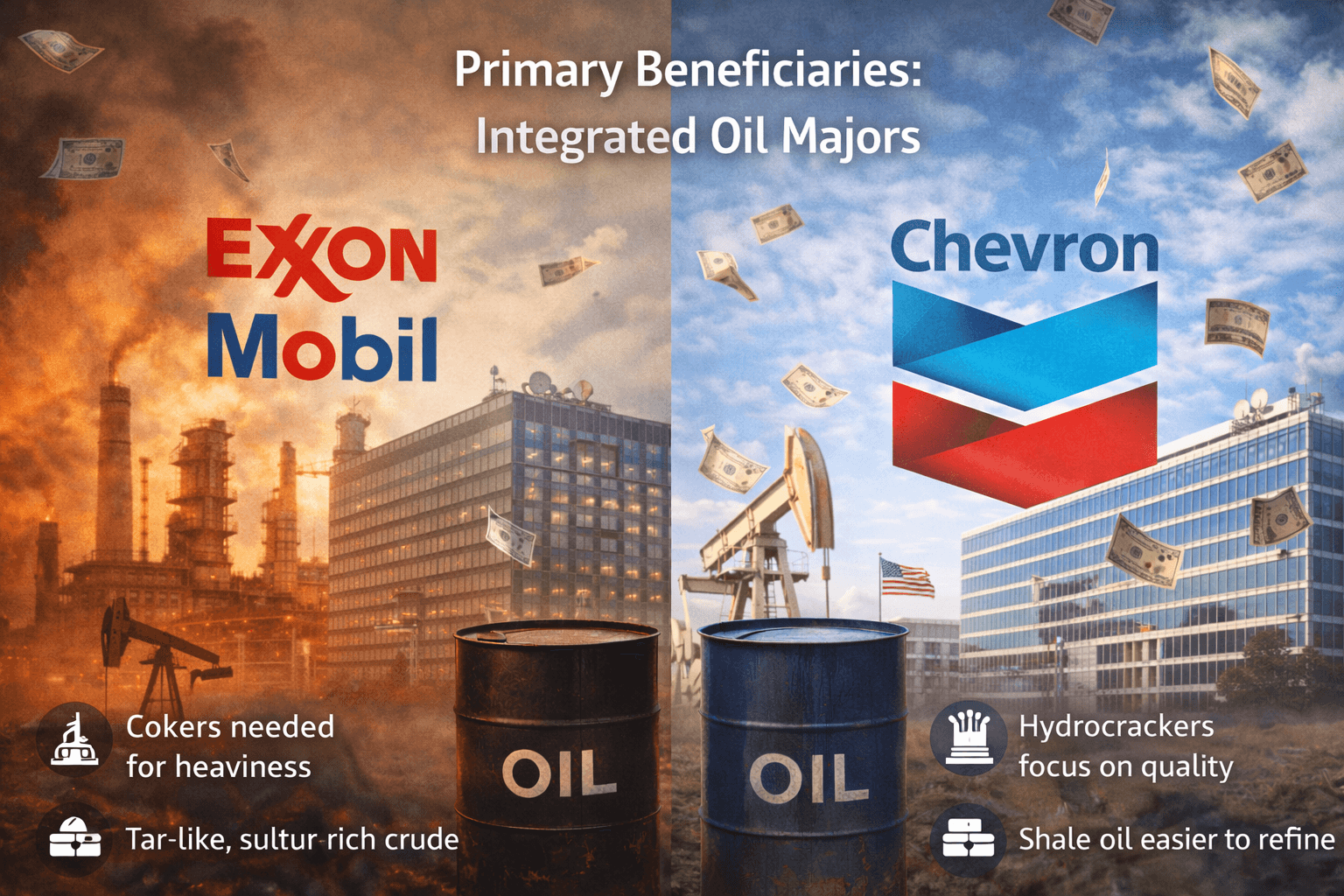 _Integrated Oil Majors*
- Exxon Mobil (XOM)
- Chevron (CVX)
Why:
- Global diversification
- Refining + upstream integration
- Ability to monetize discounted barrels
- Strong balance sheets to absorb volatility
These companies don’t need oil at $100 to win — they need access, scale, and margins.
U.S. Refiners with Heavy-Crude Capability
- Valero Energy (VLO)
- Phillips 66 (PSX)
- Marathon Petroleum (MPC)
Why:
- Designed for heavy/sour crude
- Benefit from wider crude discounts
- Can expand crack spreads even if oil prices soften
🟡 Secondary Beneficiaries
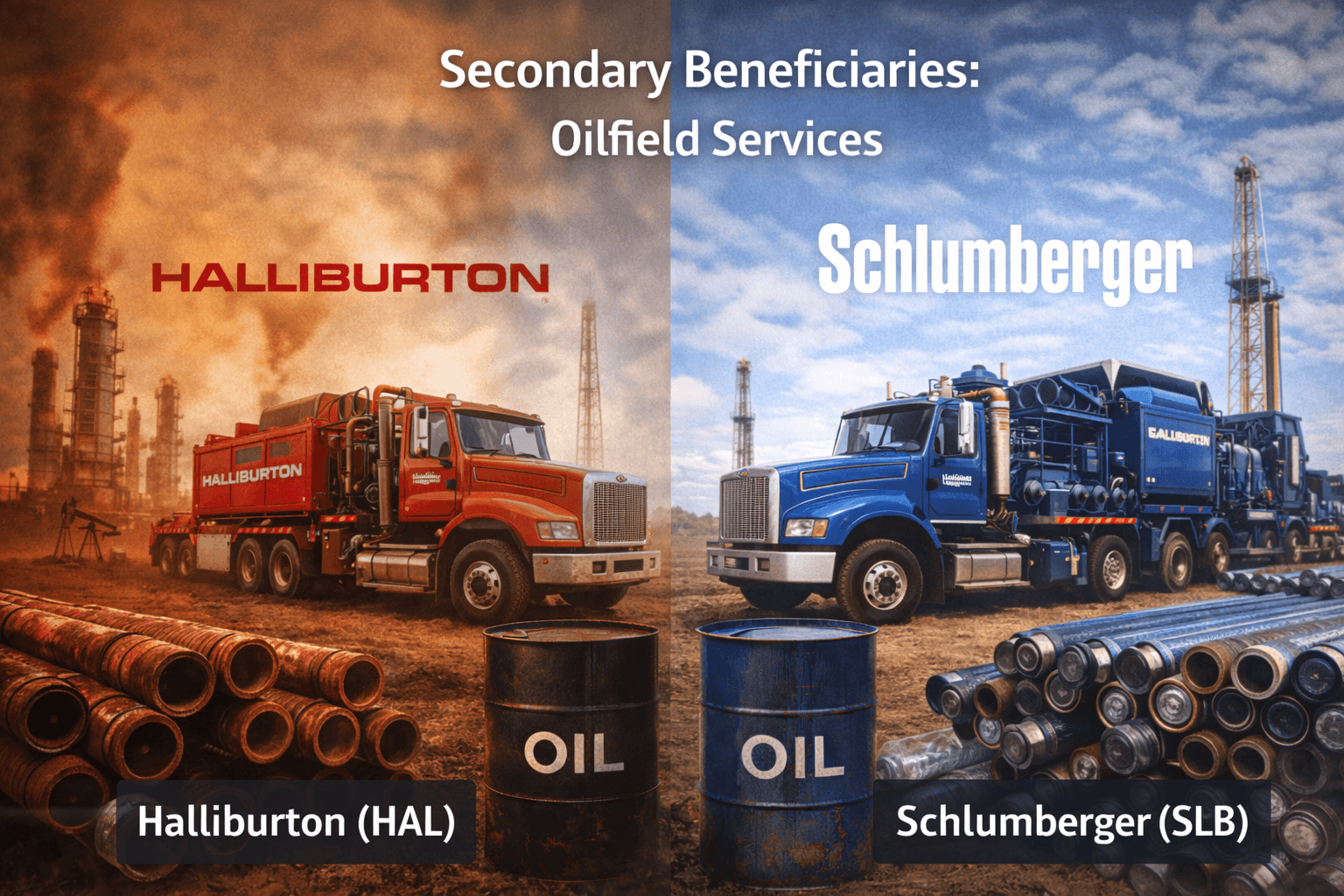 _Oilfield Services (Longer-Term)*
- Halliburton (HAL)
- Schlumberger (SLB)
Why:
- Infrastructure rebuild takes time
- Capital spending follows political clarity, not headlines
- Higher upside later, not immediately
🔴 Who Benefits Less
Pure-Play U.S. Shale Producers
- Less exposure to heavy crude
- Faster production declines
- Higher reinvestment requirements
These names are more sensitive to spot oil prices, not refining economics.
The Bottom Line
- Venezuelan oil is heavy, discounted, and refinery-dependent
- U.S. oil is light, flexible, and fast to market
- Energy majors and refiners benefit from access and margins, not just higher prices
- Any Venezuelan supply recovery is gradual, not immediate
This is why our energy thesis remains intact.
Energy stocks are not simply a bet on oil going higher — they are a bet on cash flow, asset value, and operational leverage in a world where supply remains complex and geopolitics never stay quiet for long.
Our Services for the New Year 2026:
Silver Membership
Options entries only + community access (best for beginners who want simple, clean alerts).
Gold Membership
Full alerts experience (options + futures), plus deeper community channels and ongoing market coverage.
Lifetime Legacy Membership
Lifetime access to our full signals ecosystem + courses + premium community + long-term value for serious traders.
Ready to join? View Pricing & Memberships